In the ever-evolving landscape of PC gaming, the relentless pursuit of higher frame rates and smoother visuals often feels tied to an expensive cycle of hardware upgrades. The promise of technologies like DLSS and FSR is alluring, but they frequently require the latest generation of graphics cards, creating a significant barrier for those with older or more modest systems. Yet, as we move deeper into 2026, a powerful alternative has emerged, democratizing frame generation in a way few could have predicted. For less than the price of a new game, a small application on Steam called Lossless Scaling is changing the game for players on aging hardware, handheld devices, and anyone looking to squeeze more performance from their existing setup without breaking the bank.
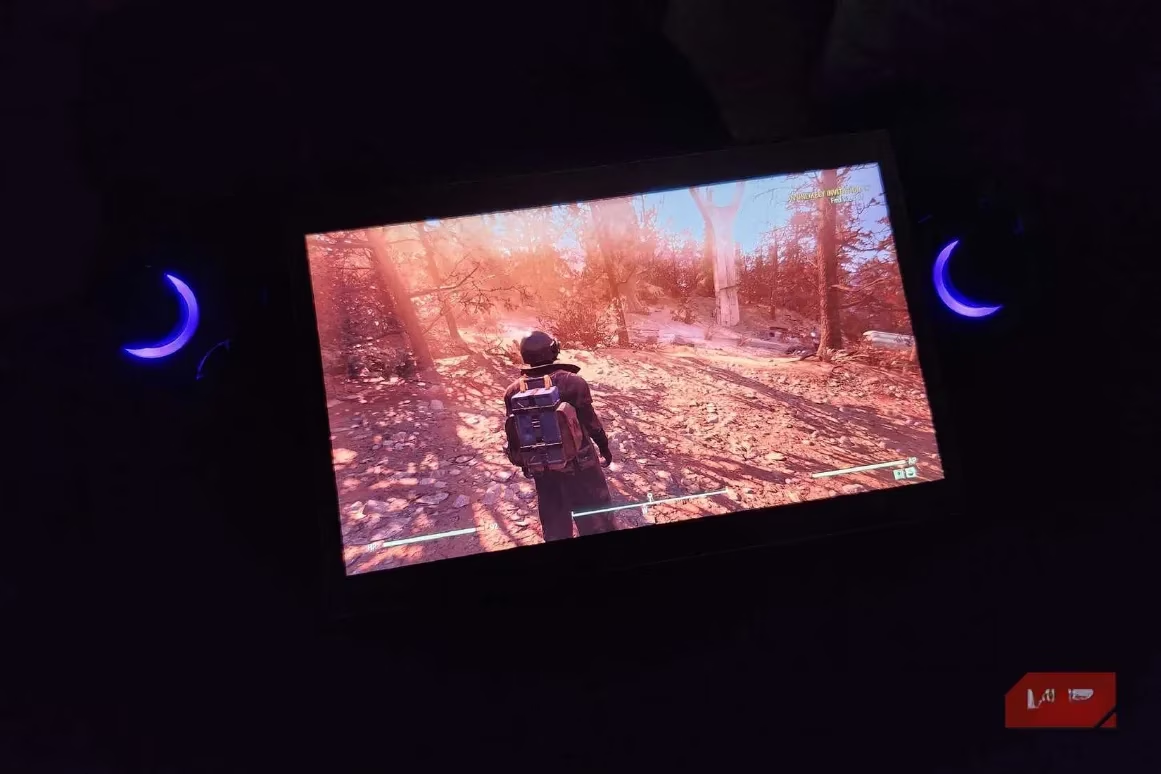
At its core, Lossless Scaling utilizes an AI-powered technology known as LSFG (Lossless Scaling Frame Generation). This process intelligently creates interpolation frames, effectively boosting the perceived frame rate. It works by rendering the game at a lower internal resolution and then upscaling it, all while inserting these AI-generated "fake" frames to create a remarkably smooth experience. The analogy often used is that it's like the mythical concept of "downloading more RAM" to speed up your PC—but this time, it's genuinely effective and legitimate. This approach means that gamers are no longer solely dependent on the raw power of their GPU for smooth gameplay.
The application's versatility is one of its greatest strengths. It is not confined to a specific brand or generation of graphics card, offering a universal solution for frame generation. This universality has made it a favorite among handheld PC gamers. For instance, users playing titles like Fallout 76 on devices like the ROG Ally X have reported achieving a consistent 60 FPS on higher graphical presets, a feat that would typically require significant graphical compromises. The experience is described as transformative, allowing for high-quality gaming from the comfort of a couch without the usual trade-offs.
🕹️ Breathe New Life Into Classic Titles
One of the most exciting applications of Lossless Scaling is in revitalizing older games. Many titles from the seventh generation of consoles and earlier, such as Assassin's Creed: Black Flag or RAGE, were often built with hard-coded frame rate caps, typically locking them at 30 or 60 FPS. Lossless Scaling cleverly bypasses these limitations, allowing players to inject higher, smoother frame rates into these classic experiences. The result can make an older game feel surprisingly modern and responsive again. While some titles may require minor tweaks, like enabling borderless windowed mode via a mod, the effort is minimal compared to the dramatic improvement in fluidity.
⚙️ How It Stacks Up Against Native Solutions
It's important to contextualize Lossless Scaling within the broader ecosystem of performance enhancement technologies:
| Technology | Primary Requirement | Best For | Typical Cost |
|---|---|---|---|
| NVIDIA DLSS | RTX 20-Series or newer GPU | Users with modern NVIDIA hardware | Included with GPU purchase |
| AMD FSR | Wide GPU compatibility (AMD, NVIDIA, Intel) | Users seeking open-source, cross-vendor solution | Included with supported games |
| Lossless Scaling (LSFG) | Any DirectX 9-12 or Vulkan game | Older PCs, handhelds, budget systems, uncapping old games | ~$10 one-time purchase |
As the table shows, Lossless Scaling carves out a unique niche. While DLSS and FSR are fantastic for newer titles that explicitly support them, LSFG acts as a universal overlay, working with a vast library of games that may never receive official support for those technologies.
⚠️ Understanding the Trade-Offs
No technology is perfect, and Lossless Scaling is transparent about its compromises. The two primary considerations are:
-
Input Lag: The process of generating and inserting frames inevitably introduces a degree of latency. This makes the tool less suitable for highly competitive, twitch-reaction games like Rainbow Six Siege or Valorant, where every millisecond counts. For single-player adventures, RPGs, or casual multiplayer games, however, this added latency is often imperceptible or a worthy trade for doubled frame rates.
-
Visual Artifacting: As an AI interpolator, the software can sometimes create minor visual glitches. Players might notice slight warping, smearing, or "wobble" on fast-moving objects, UI elements, or during rapid camera pans. In Fallout 76, for example, the map screen might exhibit a subtle warble. For most users, these artifacts are a minor distraction easily overlooked in favor of the vastly improved smoothness.
🛠️ Practical Use and Accessibility
Getting started with Lossless Scaling is straightforward. The Steam application provides a clean interface for configuring settings like the target frame rate and scaling mode. For handheld devices running SteamOS, like the Steam Deck, integration is available through community plugins like Decky Loader, making it seamless to toggle on and off per game. This ease of use extends its appeal from desktop tinkerers to casual handheld gamers looking for an instant performance boost.
🔮 The Verdict: A Game-Changer for the Right Audience
For many gamers in 2026, Lossless Scaling has proven to be a revelation. It serves as a secret weapon for several key demographics:
-
Handheld PC Users seeking to maximize battery life and performance.
-
Owners of Aging PCs who want to extend the life of their hardware for a few more years.
-
Retro Gaming Enthusiasts wanting to modernize the feel of their favorite classic titles.
-
Budget-Conscious Builders of compact or mini-PCs where every frame per watt matters.
With Steam's standard refund policy (under two hours of playtime), there's virtually no risk in testing it with your own game library. While it may not replace the need for a high-end GPU in every scenario, Lossless Scaling stands as a powerful testament to software innovation, proving that sometimes, the best upgrade isn't a new piece of hardware, but a clever piece of code. It empowers gamers to reclaim performance, one AI-generated frame at a time. 😊
Leave a Comment